
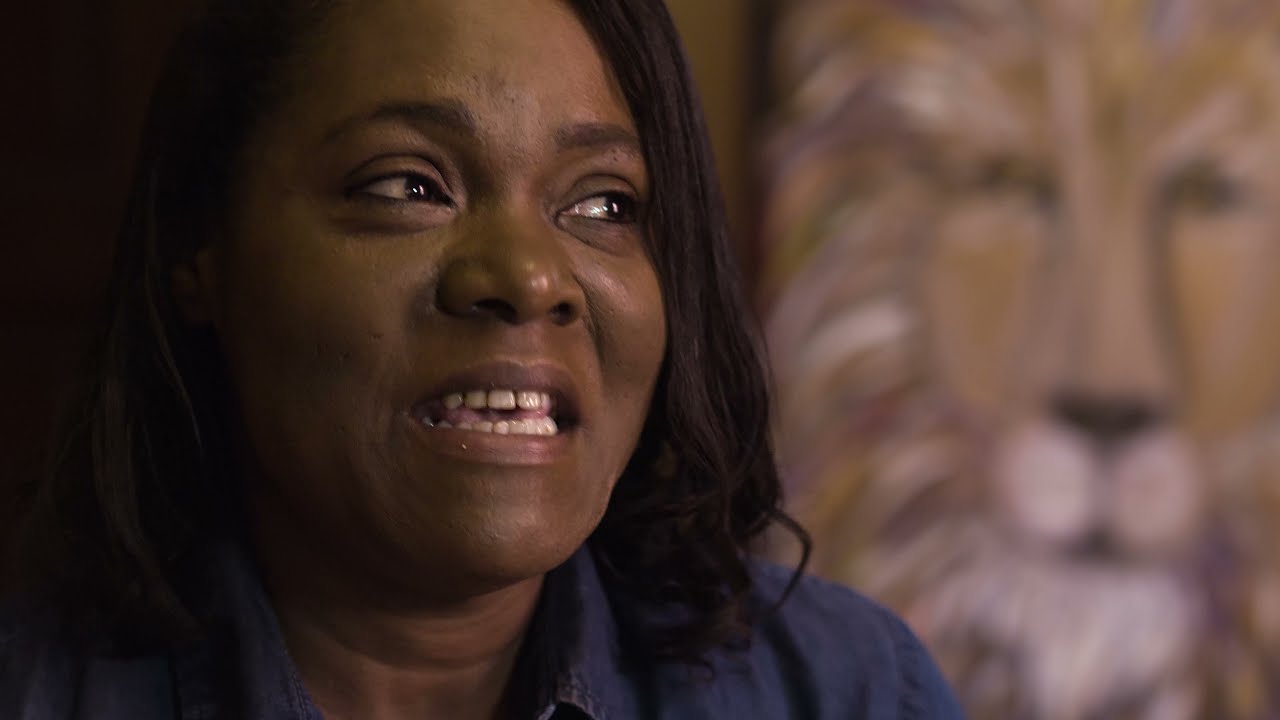
A How Do You Serve story · Based on Zyra's filmed interview
Before the day gets away from her, Zyra reaches for a brush. Painting has become part of her morning routine, as ordinary and necessary as coffee. The life that brought her to the canvas began far from an art class.
In 1985, four days after graduating from high school, Zyra left Memphis for Army basic training. She wanted discipline and the chance to build a life on her own. Her first assignment was as a medic at the Pentagon Health Clinic. At 18, she also drew special duty on the White House lawn. Her family wrote with pride; Zyra remembers thinking that she was simply doing her job.
She wanted more of that work. Zyra retrained as a military police officer and joined the 988th MP Company. She deployed to Panama and twice to Honduras. In the film, she recalls the responsibilities she was given and the respect she found among the soldiers beside her. That trust built confidence she carried into the rest of her career.
The Army gave her a way of working that stayed with her: begin a job, see it through. After five and a half years of service, she left and spent nine years as a correctional officer. Yet she felt her military career was unfinished. She reenlisted, trained as a combat medic, and hoped to become a flight medic.
When the path changed.
An injury during training changed that plan. As her unit prepared to deploy to Afghanistan, Zyra was held back. She later learned that her injuries would end her Army career. The separation was difficult to imagine. “To me, the Army was everything,” she says in the film. It was work, purpose, and a community she considered family.
She began painting small things. After moving to Cape Girardeau, Missouri, she visited the local VA clinic, where her paintings were displayed. Staff introduced her to other veterans making art. The attention people gave her work helped her see what the practice could offer, both when she was alone with her thoughts and when she shared a painting with someone else.
Zyra describes finding anger, sadness, and joy in the colors on a canvas. Painting gave those feelings a place to go and gave her something to look forward to each morning. She is clear in the film that art is one part of what has helped her, alongside medical care and counseling.
What happens around the table.
Her focus now reaches beyond her own paintings. Art classes can cost more than some veterans can afford, and getting to them can be difficult. Through the VA, Zyra shares art with fellow veterans and invites them into a room where they can spend time together and try something new.
“It's not even about making art,” she says. The gathering itself matters. A person can arrive without knowing what to paint and still leave having made a connection.
Zyra's story does not trace a neat line from one uniform to another role. It shows how service can change shape while keeping its human purpose. She once cared for people as a medic. Today she makes space for fellow veterans to create, to talk, and to be seen.